How to Make Your Home Look More Expensive (Without Spending a Fortune)
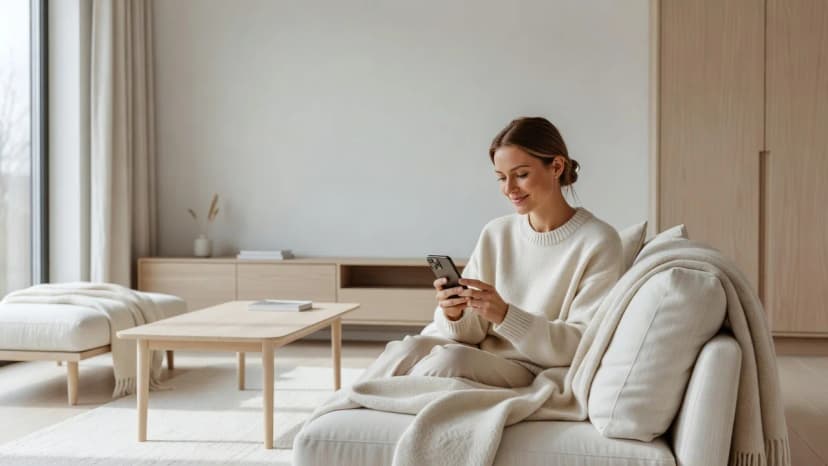
The homes that look most expensive almost never are. The houses that get tagged "obsessed with this room" on social media are rarely furnished with the most expensive sofa in the catalog — they are styled with the right combination of warm light, considered textures, oversized art, and quiet restraint. Looking expensive is a set of small decisions, not a big bank balance.
Here are 12 of the most effective ways to make your home look more expensive in 2026 — plus a simple way to test each one on your actual room before you change anything.
How Do I Make My Home Look More Expensive?
The fastest way to make your home look more expensive is to upgrade the four elements that everyone notices first: wall color, lighting, soft furnishings, and one statement piece. You do not need to spend a fortune. You need to make the right four changes. Using DecorAI, you can test each upgrade on a photo of your actual room in seconds — so you only spend money on the changes that genuinely lift the space.
What Makes a Home Look Expensive?
Expensive-looking homes share a small handful of qualities, and almost none of them require a designer-priced budget:
- Warm, layered lighting — not a single overhead bulb.
- A cohesive color palette — three colors, not ten.
- Real textures — linen, bouclé, wool, stone, oak, brass.
- Considered scale — oversized art, larger lamps, taller curtains.
- Restraint — fewer items, displayed well, with breathing room.
- One statement piece — a sculptural lamp, a bold sofa, a striking artwork.
Notice that none of that requires a marble kitchen or a custom chandelier. The signals of "expensive" are mostly about taste — and taste is testable with AI before you spend a dollar.
12 Ways to Make Your Home Look More Expensive
1. Repaint Walls a Warmer Tone
The single most expensive-looking upgrade you can make is the cheapest: a fresh coat of paint in a warm off-white, mushroom, oat, or clay. Pure brilliant white reads as cheap and cold; warmer tones read as collected and considered. Test the new color in DecorAI before buying a single can.
2. Layer Three Light Sources Per Room
Cheap-looking rooms have one bright ceiling light. Expensive-looking rooms have at least three layers: a soft ambient source, a task light, and an accent. Add a floor lamp, a table lamp, and a small picture or shelf light. Use warm bulbs (2700K or lower).
3. Hang Curtains Floor-to-Ceiling
Hanging curtains close to the ceiling, with rods that extend well beyond the window, makes any room feel taller and more luxurious. The fabric should pool slightly at the floor. Pale linen or heavyweight cotton in cream or oat reads as expensive at almost any price point.
4. Swap Hardware to Brass or Matte Black
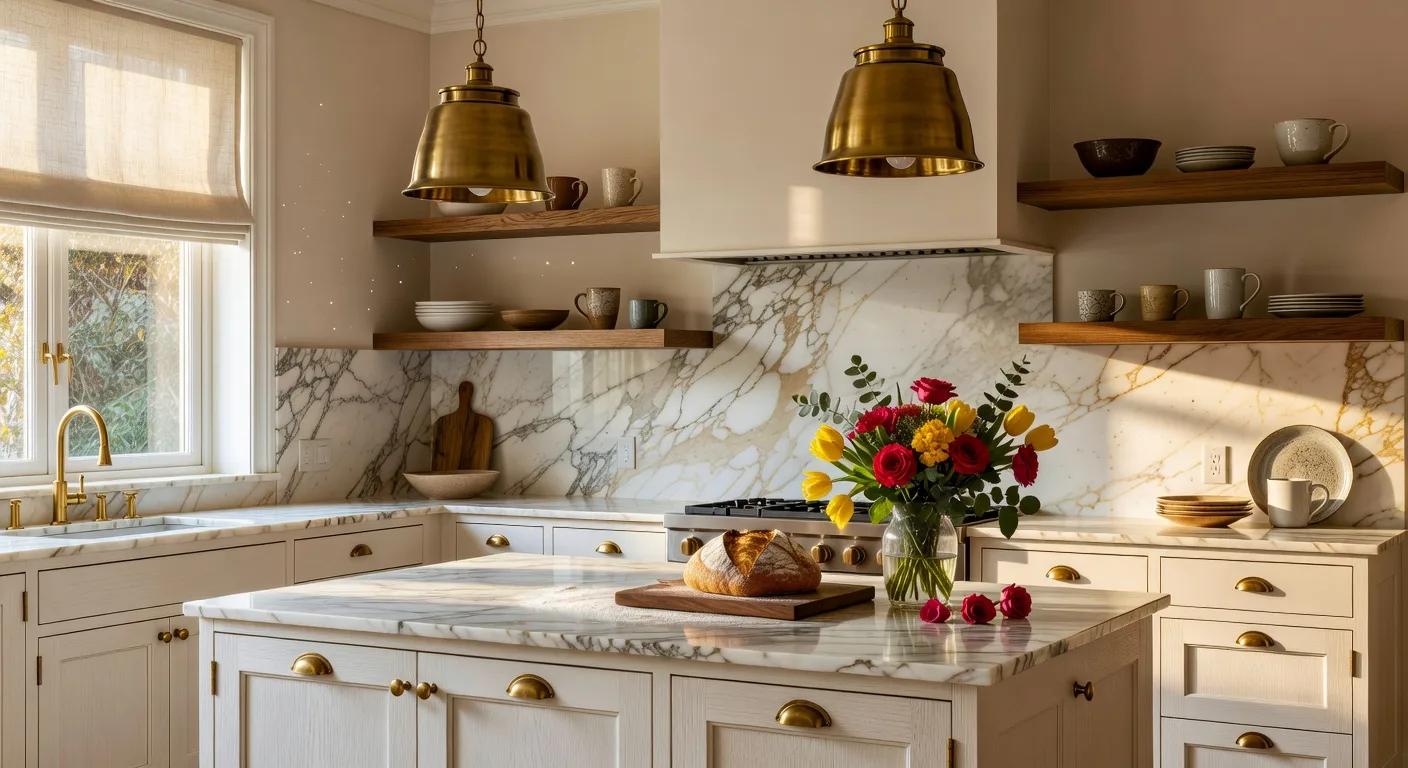
Builder-grade brushed nickel screams "rental." Swapping cabinet pulls, door handles, and faucet hardware to brushed brass or matte black is the cheapest visual upgrade in any kitchen or bathroom. The whole room changes for the price of a few replacement pieces.
5. Add One Oversized Piece of Art
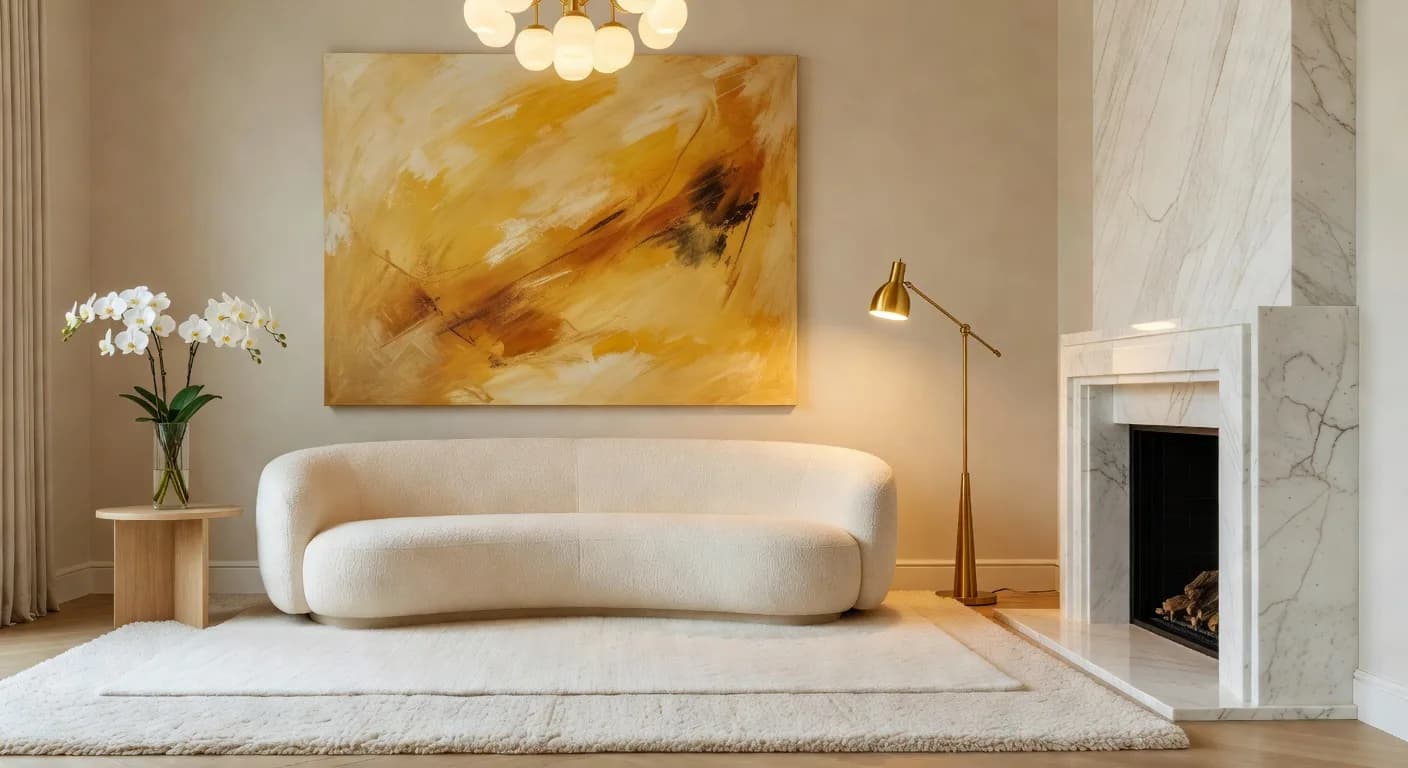
One enormous piece of art, hung at the right height, instantly makes a room feel curated and intentional. Skip the small gallery wall and go big. Affordable abstract prints in warm neutral tones look the most expensive.
6. Use Larger Lamps
Lamps that are too small make a room feel under-styled. A genuinely tall floor lamp or a generous table lamp adds presence and warmth. Linen shades read as more expensive than glossy ones.
7. Layer Real Textures
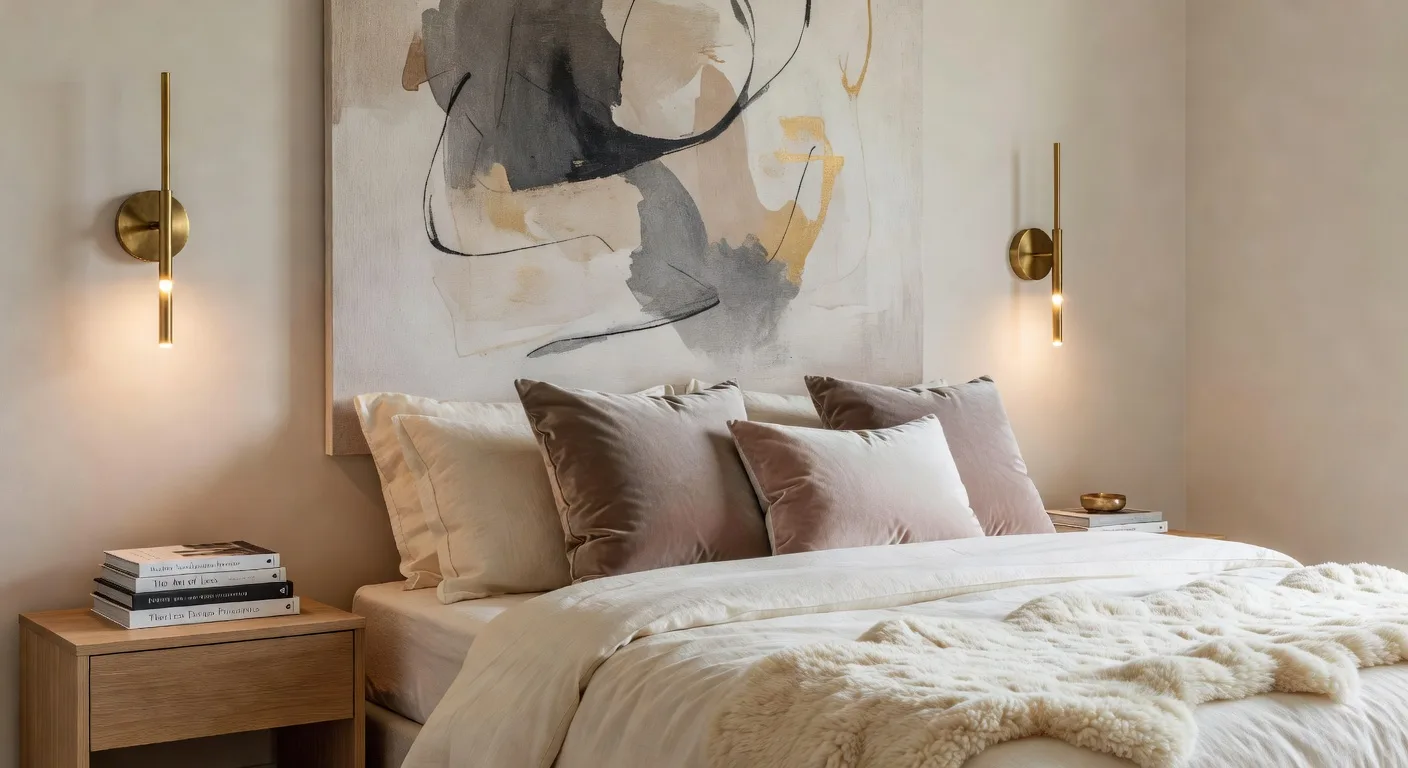
Touch is the most underrated luxury signal. Layer linen, bouclé, wool, sheepskin, jute, oak, marble, and brass. A room with five different natural textures feels far more expensive than a room with three matching synthetic ones.
8. Choose a Cohesive Three-Color Palette
The most expensive-looking rooms use only three colors: a primary (cream, oat, or warm white), a secondary (oak, taupe, or charcoal), and one accent (burgundy, deep green, ochre, or chocolate brown). Everything else stays in those three lanes.
9. Bring in Fresh Flowers or a Real Plant
One arrangement of fresh flowers in a beautiful vase, or one well-cared-for plant in a stoneware pot, adds the kind of life that money cannot quite buy. Eucalyptus, peonies, dried pampas, or a fiddle leaf fig all photograph as expensive.
10. Edit Your Surfaces
Cheap-looking rooms are crowded. Expensive-looking rooms have breathing room. Pull everything off a surface, then put back only the three or four items you genuinely love. Negative space is luxury.
11. Upgrade Soft Furnishings Before Furniture
Before buying new furniture, upgrade cushions, throws, and rugs. A neutral sofa with a beautiful bouclé cushion and a vintage rug looks more expensive than a brand-new designer sofa on builder-grade carpet.
12. Add One Statement Piece
Every expensive-looking room has one piece that the eye locks onto first — a sculptural floor lamp, an oversized mirror, a vintage credenza, a single bold artwork. You only need one. Choose it carefully.
Test the Expensive Look on Your Room with AI
The smartest way to apply any of these 12 ideas is to test them on your actual room first, before you spend money you cannot get back. With DecorAI, you can:
- Upload a photo of any room.
- Apply a "luxury" or "modern" style and see how the principles above translate to your specific space.
- Try different palettes (warm cream, mushroom, clay) to see which feels right.
- Test layered lighting, oversized art, and statement pieces in seconds.
- Compare the result side by side with your current room to confirm the changes are actually lifting the space.
Most people use this loop two or three times — they try a style, notice what works, refine, and end up with a clear picture of the changes worth investing in.
Room-by-Room Tips
If you only have time to upgrade one room, here is where the budget goes furthest:
- Living room — repaint walls, hang taller curtains, add one oversized artwork.
- Bedroom — layered linen bedding, two matching wall sconces, one statement headboard or oversized art piece.
- Kitchen — swap hardware, add one stone or wood cutting board on display, fresh flowers on the counter.
- Bathroom — change the lighting, replace the mirror with a larger one, add hand-thrown ceramics and a real plant.
- Entryway — one beautiful console, one oversized mirror, one piece of art. Nothing else.
Mistakes to Avoid
The fastest ways to make a home look less expensive — even by accident:
- Too many small decorations. Clutter reads as cheap, even when the individual items are nice.
- Bright overhead lighting only. Cool, bright overhead light is the single most "rental-looking" thing in any room.
- Matching furniture sets. A sofa, loveseat, and chair in matching fabric reads as a furniture-store package, not a curated home.
- Tiny art hung too high. Small art on big walls looks under-considered. Go bigger or group pieces tightly.
- Plastic or synthetic textures. Even one obvious synthetic element drags the rest of the room down. Choose real materials wherever you can.
Frequently Asked Questions
What single change makes a home look the most expensive?
Layered, warm lighting. Replace a single bright ceiling light with three softer warm-bulb sources and almost any room looks more expensive instantly.
How can I make my home look more expensive on a budget?
Repaint, change hardware to brass or matte black, hang taller curtains, and add one oversized piece of art. All four together cost less than most single pieces of designer furniture.
Can AI help me make my home look more luxurious?
Yes. DecorAI lets you test luxury upgrades on your actual room before you buy anything — so you only spend money on changes that genuinely lift the space.
Is DecorAI free to use?
Yes. DecorAI is free to download and use on iPhone, Android, and the web. No credit card required to get started.
Make Your Home Look More Expensive — Try It Free
Upload a photo of any room and test luxury upgrades before spending a dollar. Free on iPhone, Android, and web with DecorAI.
More from the DecorAI Blog
- 18 Living Room Design Ideas for 2026
- How to Find Your Interior Design Style with AI
- The Best AI Interior Design App in 2026 (An Honest Guide)
Further Reading
Try DecorAI Free
Upload a photo of any room and get a realistic AI redesign in seconds. Free to download — no credit card or design skills needed.


Free to download · iOS & Android · Also available on web