AI Kitchen Design: See Your Kitchen Transformed Before You Renovate
The kitchen is the most expensive room in any home to renovate — and the hardest to reverse once you've committed. New cabinets, countertops, a different layout: these are decisions you'll live with for years, often decades. Getting them wrong is costly in both money and daily frustration. AI kitchen design changes the stakes completely. Instead of making irreversible choices based on a mood board of someone else's kitchen, you upload a photo of your own kitchen and see it completely redesigned — your cabinets replaced, your countertops swapped, your color palette transformed — before you call a single contractor or spend a single dollar.
Why AI Kitchen Design Is Different from Other Rooms
Bedroom redesigns are largely about furniture and textiles — relatively easy and affordable to change. Living rooms are similar. But kitchen redesigns involve cabinetry, countertops, appliances, lighting, and flooring, all of which interact with each other in ways that are difficult to visualize without seeing the finished result. A cabinet color that looks beautiful in a showroom can feel oppressive in your actual kitchen with your actual light. A countertop material that photographs beautifully can look cold and sterile in person.
This is exactly the problem AI kitchen design solves. You see your kitchen — your specific proportions, your specific window placement, your specific light conditions — transformed into the style you're considering. Not an approximation. Not a mood board. Your kitchen, redesigned, in seconds.
The Most Popular AI Kitchen Design Styles
Kitchen design has evolved dramatically over the past decade, and the styles that perform best in AI kitchen design tend to be the ones that balance beauty with practicality. These are the styles that consistently produce the most striking transformations:
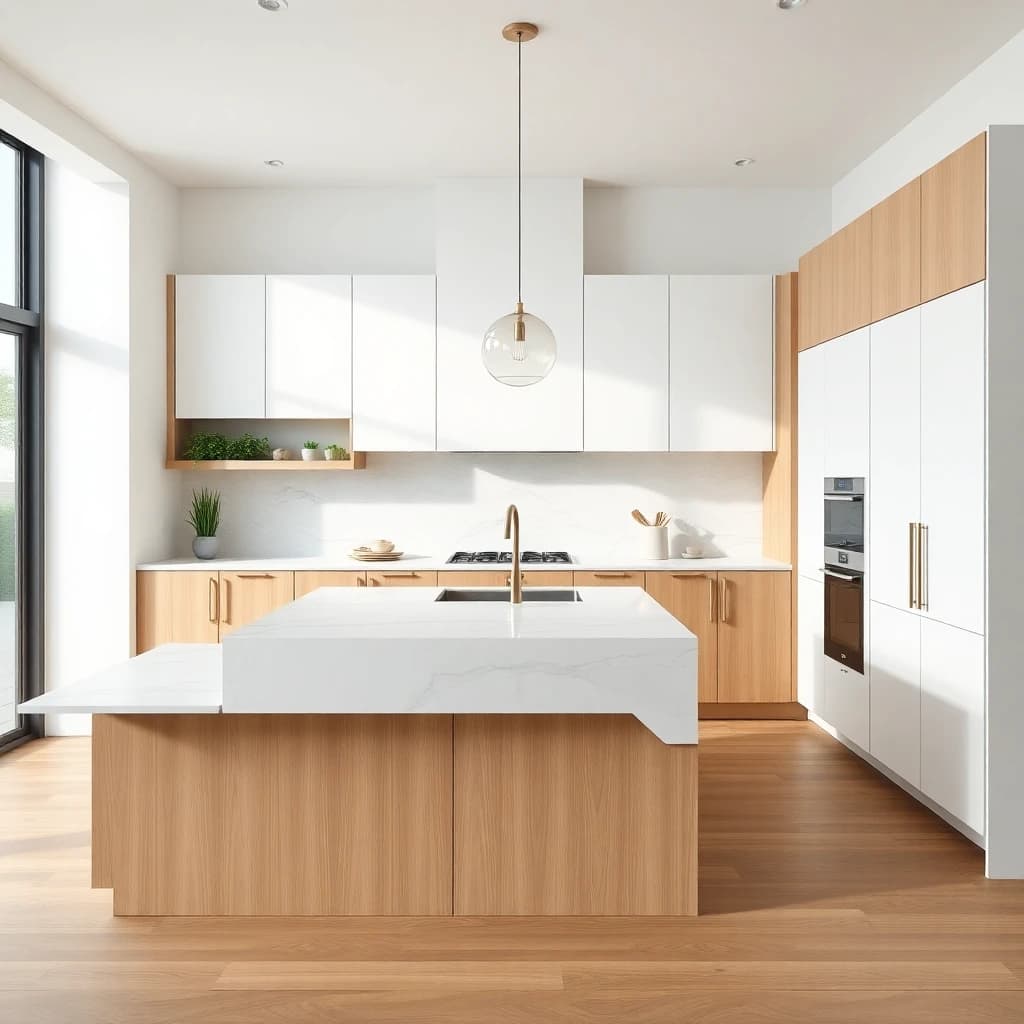
- Modern Minimalist — Flat-front cabinetry, integrated appliances, waterfall countertops, and a palette built around white, grey, and warm wood tones. Endlessly elegant and surprisingly timeless for a style that reads as contemporary.
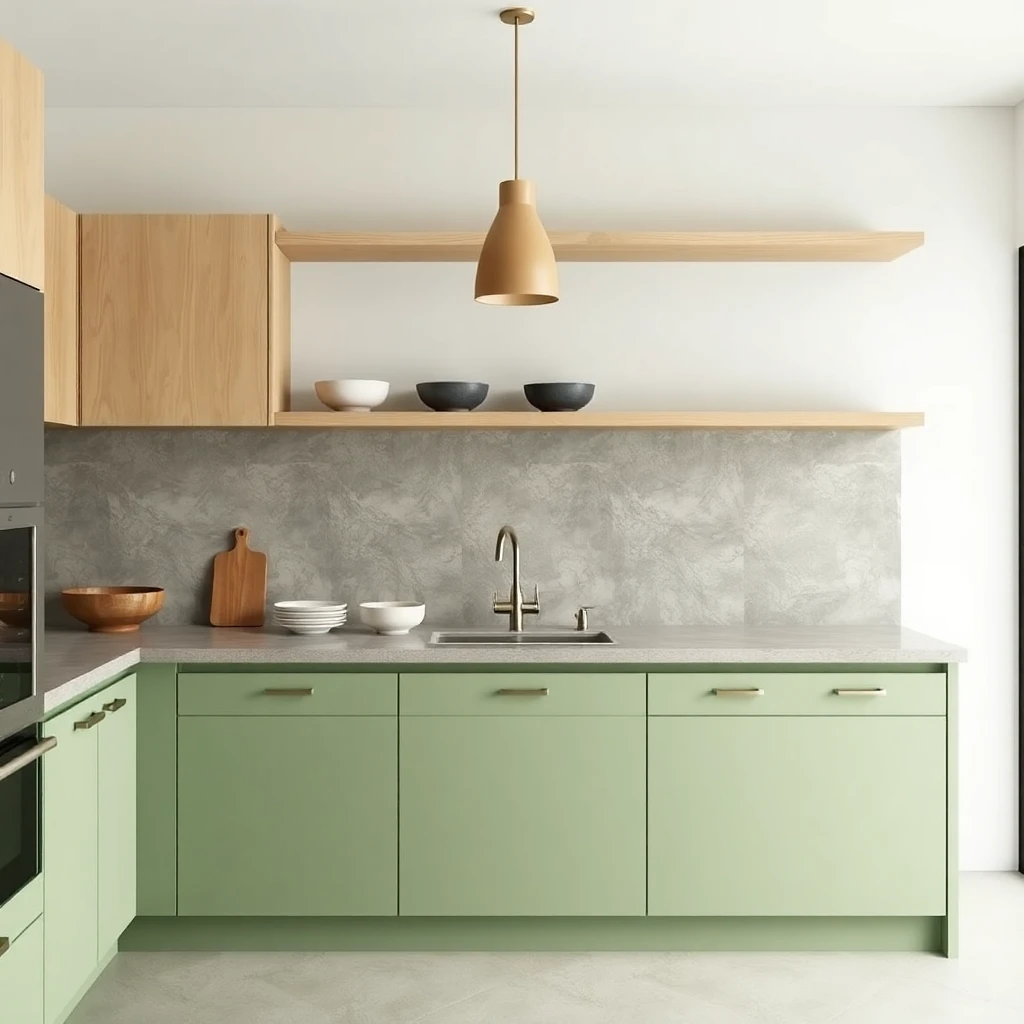
- Japandi — Matte cabinet finishes in sage, clay, or warm white paired with natural stone countertops and open oak shelving. Calm, considered, and deeply liveable. The style makes kitchens feel like the most intentional room in the house.
- Modern Farmhouse — Shaker cabinets in warm white, an apron-front sink, open shelving for dishes and ceramics, and a mix of raw and refined materials. Welcoming and unpretentious, with a warmth that makes kitchens feel like the heart of the home.
- Coastal — Pale blues, crisp whites, natural wood accents, and plenty of light. A coastal kitchen feels like a permanent holiday even in landlocked cities.
- Maximalist — Bold cabinet colors, patterned tile backsplashes, statement lighting, and personality in every detail. For kitchens that refuse to be forgettable.
- Industrial — Open metal shelving, concrete or stone surfaces, matte black hardware, and pendant lighting with an urban edge. Dramatic and practical in equal measure.
Japandi Kitchen Design: The Style That Changes Everything
If you've been following interior design trends at all in the past few years, you've noticed Japandi making a quiet takeover of kitchen design — and for very good reason. The Japandi kitchen is the antithesis of everything that makes modern kitchens feel sterile. Where standard contemporary kitchens often prioritize sleek surfaces and seamless integration to the point of feeling like a laboratory, Japandi brings in warmth through natural materials, considered imperfection, and a sense of quiet beauty that makes you actually want to spend time in the kitchen.
A Japandi kitchen typically works with a two-tone cabinet palette — matte sage green, clay, or charcoal for the lower cabinets, paired with pale oak or white for the upper cabinets or open shelving. Stone or honed marble countertops replace high-gloss surfaces. Hardware is minimal — simple bar pulls in brushed brass or matte black. A ceramic pendant light or two hang over the island. A few handmade bowls on the open shelves. Nothing more.
The result is a kitchen that feels completely different from the rest of the market — not trendy in a way that will date in three years, but grounded and considered in a way that will still feel right in twenty. Try the Japandi style on your kitchen photo in DecorAI and see how quickly the transformation lands.
Modern Farmhouse Kitchen: The Style That Works in Any Home
Modern Farmhouse is the most consistently requested kitchen style for a reason: it works in almost any home, with almost any existing layout, and it ages extremely well. The combination of Shaker cabinetry — that classic five-piece door with a recessed panel — in warm white or cream, an apron-front sink, and open shelving for displaying everyday dishes creates a kitchen that feels genuinely lived-in and welcoming rather than showroom-perfect.
What makes Modern Farmhouse so effective for kitchen design is its flexibility. It can skew more traditional with aged brass hardware and beadboard paneling, or more contemporary with matte black accents and minimal decor. The core elements — Shaker doors, warm palette, natural textures, open shelving — stay constant, but the details can be tuned to suit your personal taste and your home's existing character.
In AI kitchen design results, Modern Farmhouse almost always produces a strong before/after contrast — particularly in kitchens that currently have flat, dark, or dated cabinetry. The lightening effect alone is often enough to make the transformation feel dramatic.
Before and After: What AI Kitchen Design Actually Looks Like
The before/after comparison is the most powerful feature of AI kitchen design, and nowhere is it more striking than in the kitchen. A room that currently feels dark, cramped, or dated can look completely unrecognizable after an AI redesign — same footprint, same appliance placement, same windows, but an entirely different kitchen.
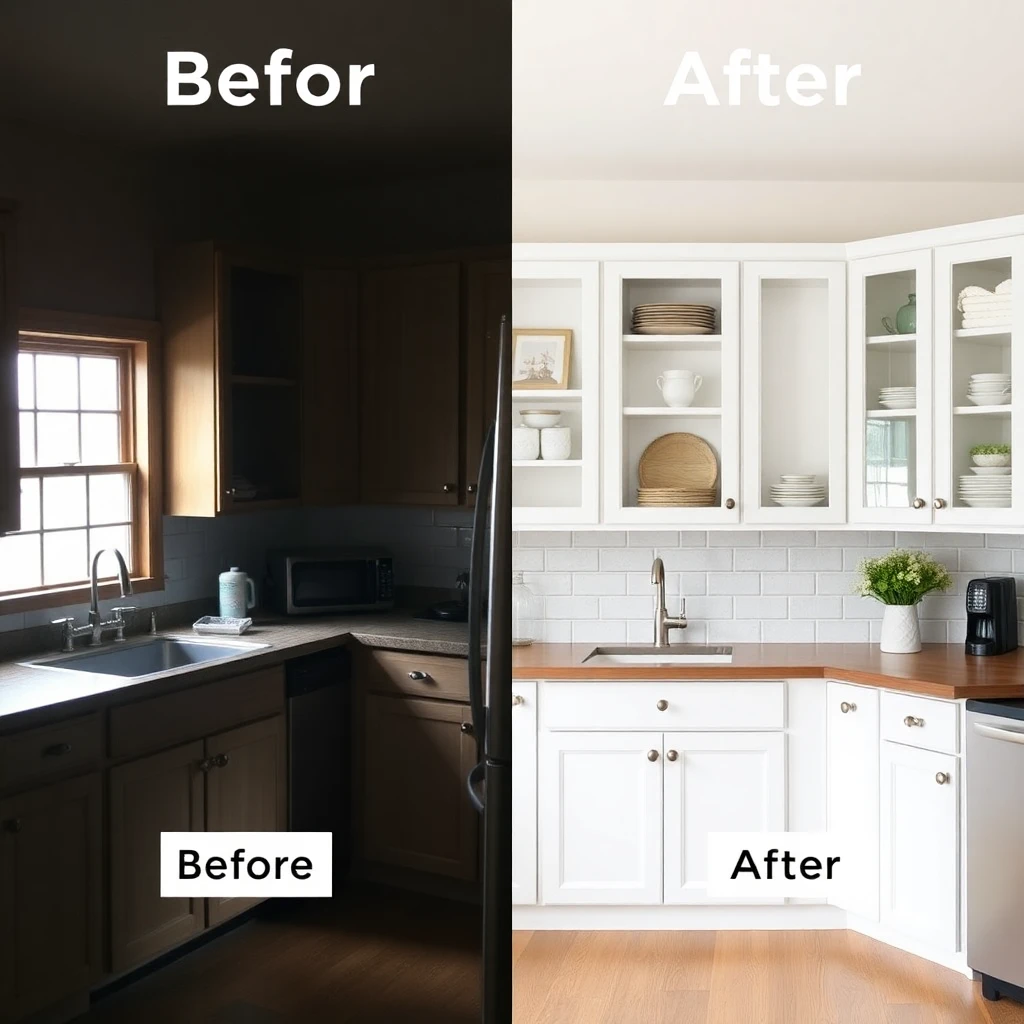
In the before image, you see a kitchen doing its job — functional, practical, nothing offensive — but also nothing you'd choose. In the after image, you see the same kitchen with the cabinet color changed, the hardware updated, the shelving opened up, and the whole palette lifted. The bones of the room are identical. The experience of being in it would be completely different. That gap — between what is and what could be — is exactly what AI kitchen design makes visible.
This is why AI kitchen design is so valuable as a planning tool before any renovation. You can test whether the transformation you're imagining is actually achievable in your specific space, identify which elements have the most impact, and build a shopping and contractor brief from a concrete visual rather than a vague description.
How to Use AI Kitchen Design as a Renovation Planning Tool
The most practical way to use AI kitchen design isn't just to see pretty pictures — it's to build a renovation brief that reduces uncertainty and second-guessing at every stage of the project. Here's how to do it:
- Start with three very different styles. Try Japandi, Modern Farmhouse, and something bold like Industrial or Maximalist. The contrast between dramatically different styles helps you understand what you actually value — whether it's warmth, drama, cleanliness, or character.
- Focus on what changes the most. In kitchen redesigns, the biggest visual impact usually comes from cabinet color, countertop material, and open vs. closed upper storage. Notice which elements in the AI result you're most drawn to.
- Use the result as your brief. Show the AI generated interior design image to your kitchen designer or contractor. Use it to search for specific cabinet styles online. Take it to a tile showroom and ask them to build a palette around it. The image becomes the north star for every subsequent decision.
- Test your shortlist before committing. Once you've narrowed down to two or three directions, generate multiple results in each and compare side by side. A small detail — the hardware finish, the countertop edge profile — can tip a kitchen from good to perfect or from good to wrong.
- Factor in your light. Upload photos taken at different times of day if your kitchen light shifts significantly. A pale cabinet color that looks bright and warm in morning sun can read as grey and cold under artificial evening light.
Try AI Kitchen Design Free
DecorAI is free to download and free to start — no credit card, no catch. Upload a photo of your kitchen, choose from 40+ design styles, and see your space completely transformed in seconds. Whether you're planning a full renovation or just want to know if a different cabinet color would change everything, AI kitchen design gives you the clarity to make confident decisions. Download free on iPhone or Android, or try it in your browser at decorai.blog.
Try DecorAI Free
Upload a photo of your kitchen and see it completely redesigned in seconds. Free on iPhone, Android, and web — no credit card needed.
More from the DecorAI Blog
- How to Redesign Your Room with AI — Step-by-Step Guide
- AI Living Room Design: Transform Your Space from a Single Photo
- Best AI Interior Design Tools to Try in 2026
Further Reading
Try DecorAI Free
Upload a photo of any room and get a realistic AI redesign in seconds. Free to download — no credit card or design skills needed.


Free to download · iOS & Android · Also available on web